
82%
82% of remote workers feel unrecognized, driving disengagement and low morale.
45%
Recognition significantly boosts retention, cutting two-year attrition by 45%.
78%
Studies show that 78% of workers who receive recognition show increased productivity

Industry research highlights explainability and trust as major blockers to enterprise AI adoption. McKinsey reports that 40% of organizations view explainability as a key risk, yet few are taking active steps to address it.
This project relied on secondary research, including industry reports from consulting firms (McKinsey, IBM, Gartner), Enterprise AI adoption studies, Articles on explainable AI and human-in-the-loop systems
References: Mckinsey.com, IBM.com, LinkedIn
Primary Target: Mid-Scale Organizations
Companies with 50-500 employees operating in the chaos zone—too large for informal recognition, too small for enterprise HR systems.
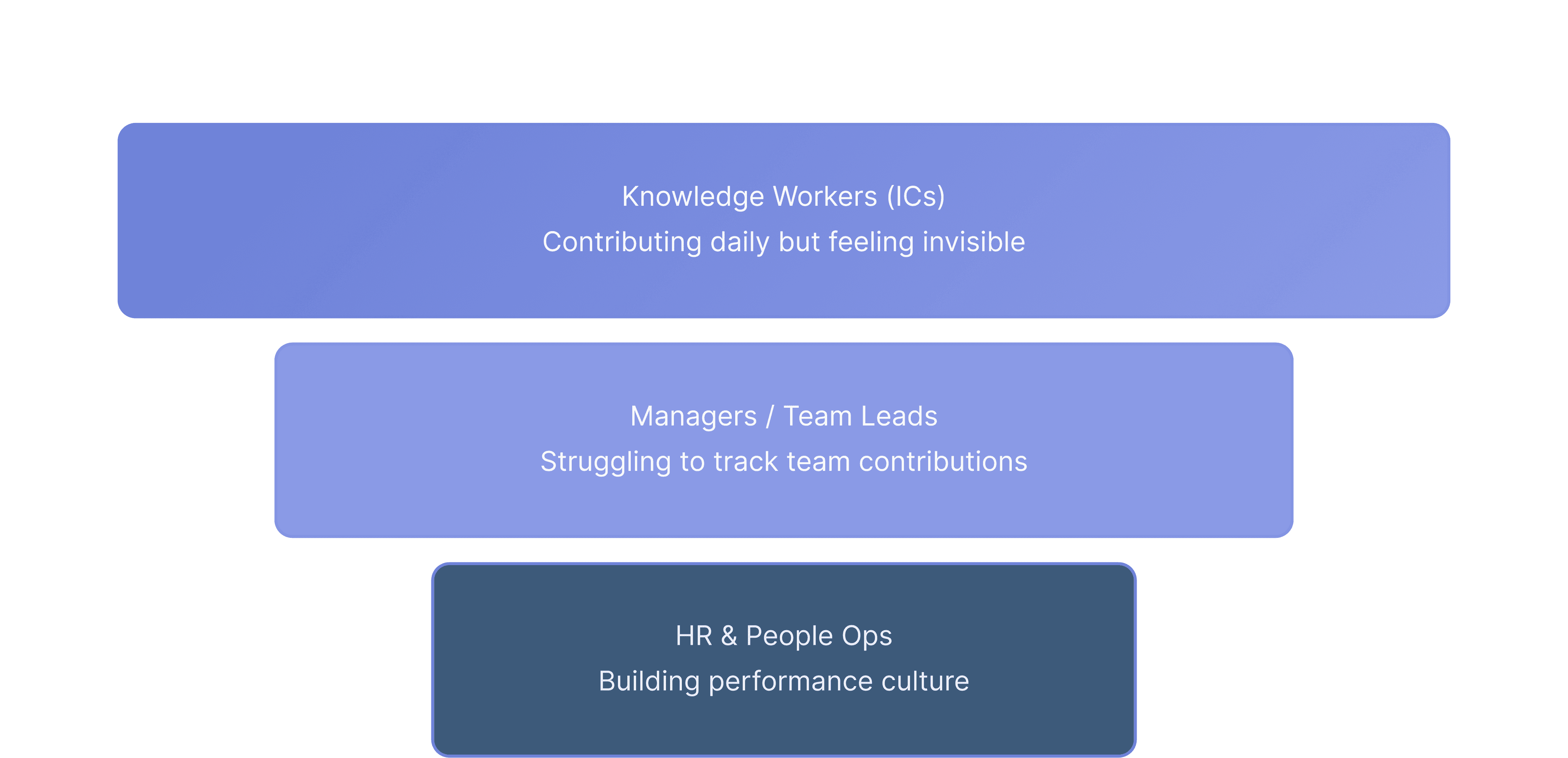
The recognition challenge varies dramatically by company size. Mid-scale organizations face a unique inflection point

The recognition gap isn't about individual failure—it's a systemic breakdown across multiple dimensions. Understanding these root causes is essential to building an effective solution.


Where Work Actually Happens
Modern work is scattered across disconnected platforms, creating blind spots in performance visibility. Organizations use dozens of tools, but none of them communicate with each other.


Managers Are Human, Not Databases
The expectation that managers can track, remember, and fairly evaluate all contributions across their team is fundamentally unrealistic. They're juggling their own IC work while trying to support their reports.

Expectation vs Reality
There is a massive mismatch between what employees need and what organizations provide. This gap directly impacts engagement, retention, and productivity.


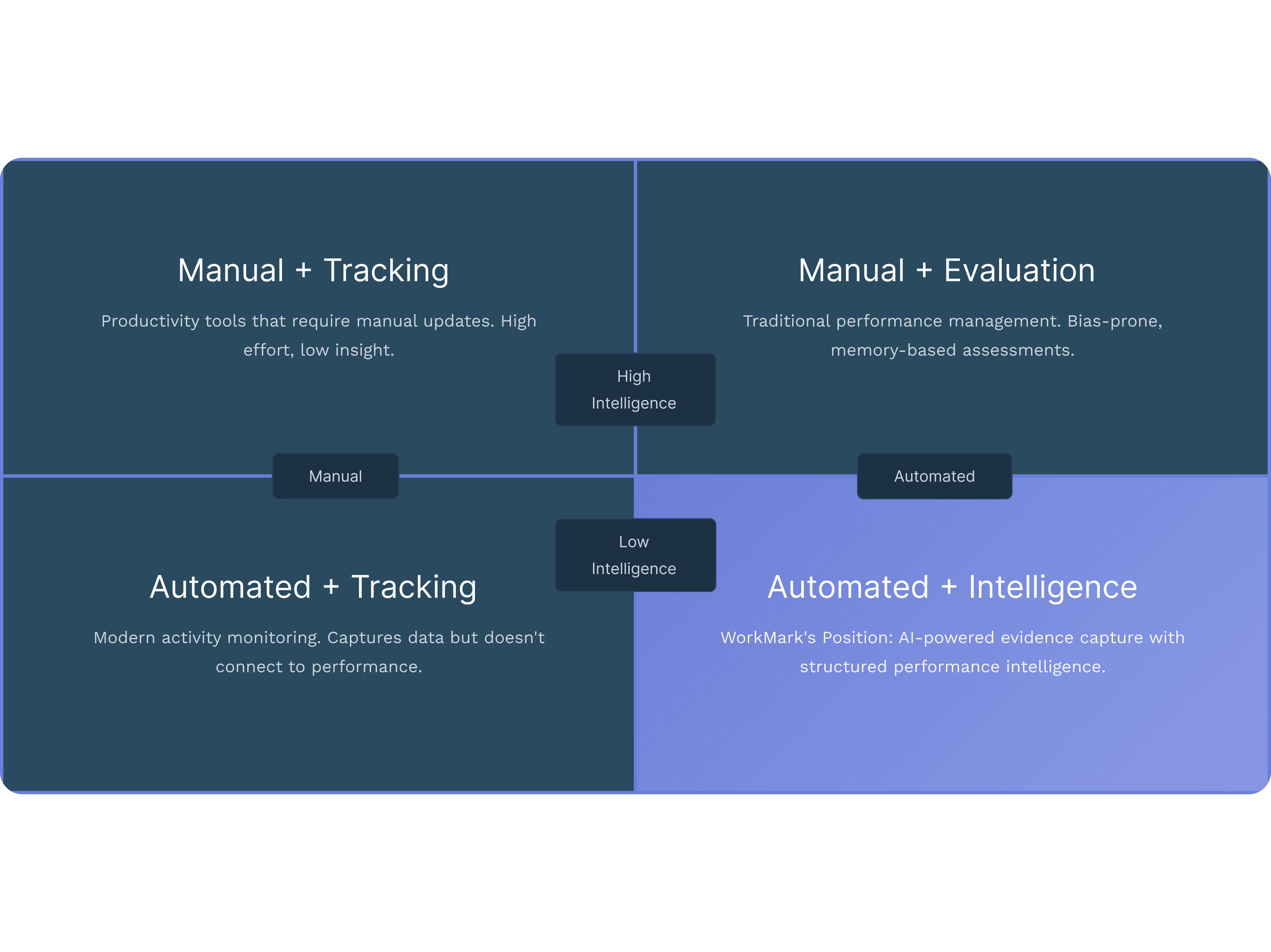
The problem persists because current solutions operate in silos:
- They operate in silos without integration
- They depend on manual reporting and human memory.
- They don't reduce bias, they may even amplify it.
- They don't integrate evidence from where work happens.
- They don't provide continuous, real-time insights.

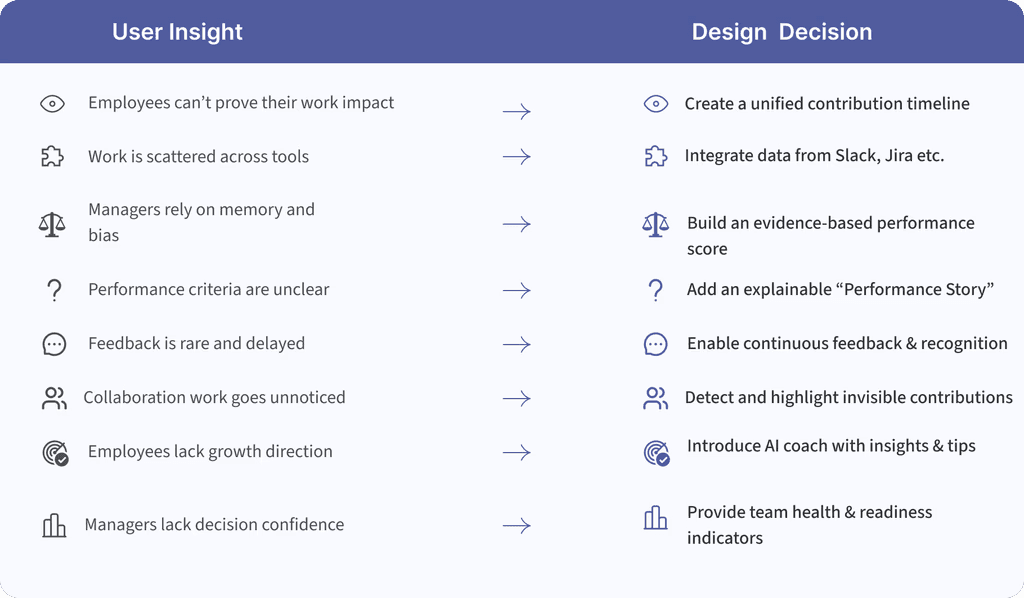
I developed this early-stage prototype in Stitch and Lovable to accelerate visual ideation and test interaction concepts, which we later evolved into the final design.
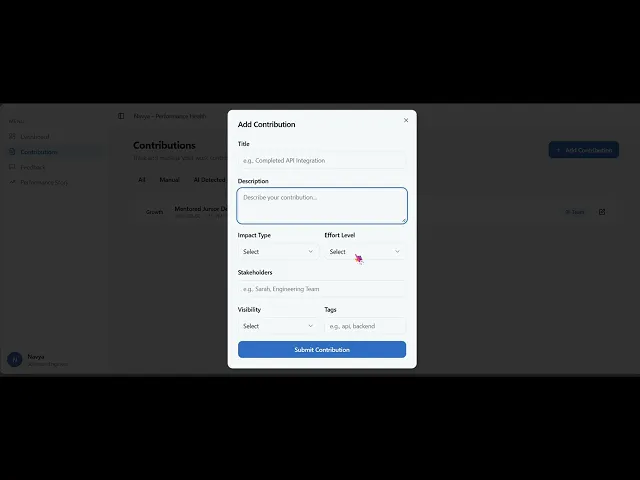

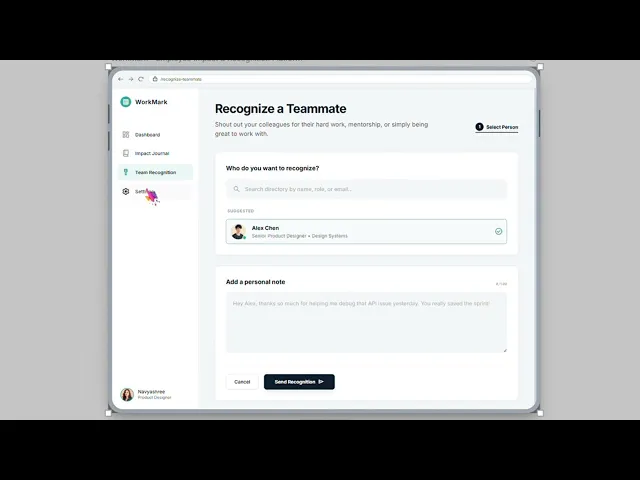
Logs work from manual inputs and integrated tools.


